Digital Technology for Process Measurement
Real time measurement delivering stable concentration data in demanding industrial processes
From Instruments to Intelligence
Sensors that go beyond capturing data.
Every industrial sensor measures something. Temperature. Pressure. Concentration. Flow. They capture physical phenomena and convert it to electrical signals. That’s the baseline: what sensors have done for decades.
But what if sensors could do more than capture? What if they could interpret, validate, and optimize right at the measurement point, in real time?
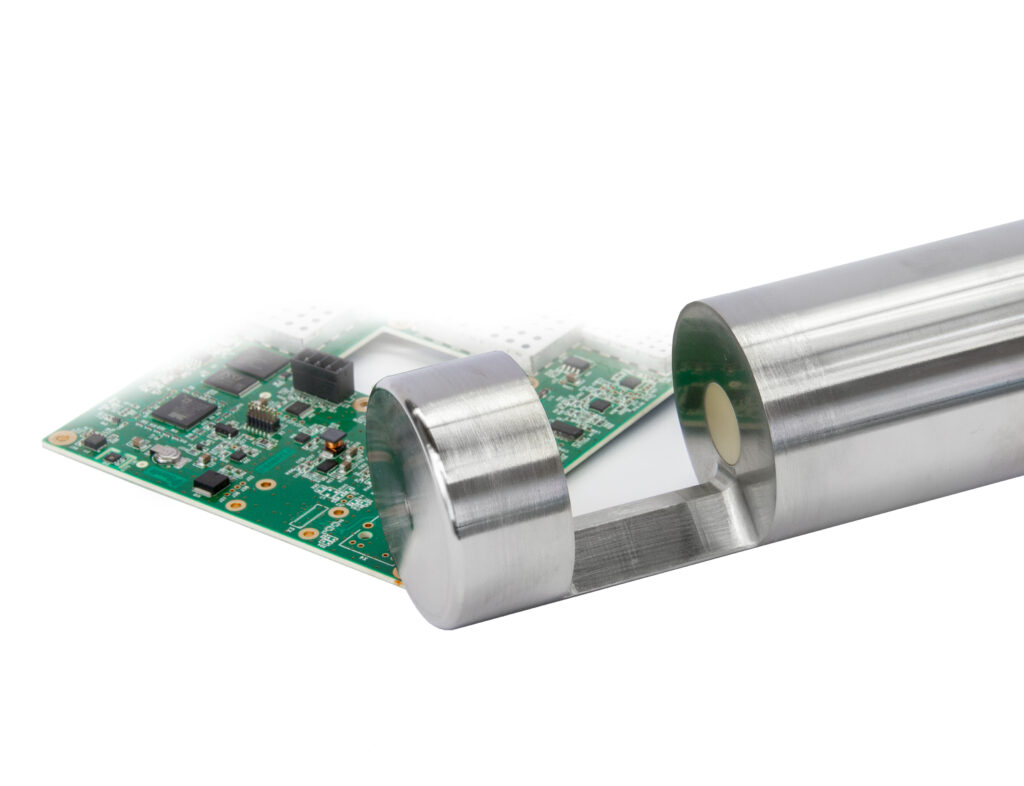
That’s the transformation happening in industrial measurement. Digital technology enables sensors to not just detect signals, but understand them. High-resolution sensing captures molecular-level changes in your process. Embedded processing analyzes those signals instantly: separating real variations from noise, compensating for changing conditions, validating data quality before transmission.
This local intelligence changes everything. Measurement stays accurate despite coating buildup. Data remains stable through temperature swings. Readings adapt to crystal formation, suspended solids, and viscosity changes automatically, without operator intervention, without recalibration.
The sensor becomes more than an instrument. It becomes a source of process intelligence, understanding context, validating quality, and delivering verified insights at the point of measurement.
Measurement that makes sense.
Inmec Measurement Principle
Phase Shift Measurement Principle

Measurement is based on comprehensive detection of electrical properties of the measured medium. A high-frequency electric field, digitally generated and transmitted by the antennas, covers and penetrates the entire liquid or slurry flowing through the pipe. The medium may consist of organic or inorganic, suspended or dissolved solids. All solids are measured as one true Total Solids (TS) value.
Multi-Variable Signal Analysis
The dielectric properties of the medium are analyzed by the sensor software through factors such as transmission, attenuation, temperature, and phase shift, all of which are affected by the medium properties. As a result of this comprehensive multivariable analysis, a true Total Solids reading is obtained.
Digital Precision and Long-Term Stability
True Total Solids measurement provides reliable readings regardless of changes in material flow rate, color, particle size, or other properties that are typically neglected or incorrectly interpreted by optical methods. Digital signal synthesizing and processing ensures a tremendous signal-to-noise ratio, which is the foundation for accurate, high-resolution measurement. A key advantage of digital technology is drift-free operation over time and over demanding and varying process conditions.
Integrated Sensor Design
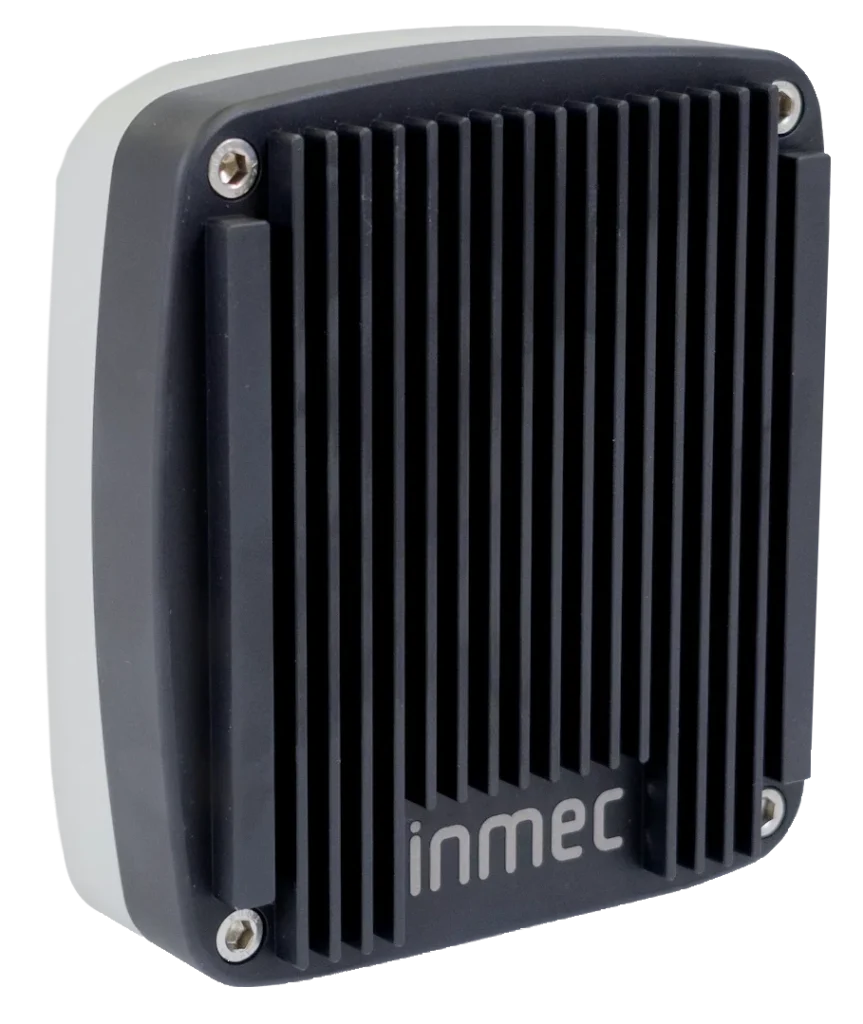
Unique All-In-One sensor structure embodies all critical components inside a solid housing. This stand-alone solution has proven to be superior since high-frequency sensor technology requires efficient radio frequency isolation against hazards caused by surrounding process machinery.
Signal processing algorithms and software are embedded in the sensor electronics with process I/O functions.
Industry-leading 3-year warranty: All Inmec sensors are backed by a full 3-year warranty, reflecting confidence in long-term performance and reliability.
Technology Comparison
| Feature | Inmec Digital Microwave | Traditional Microwave | Turbidity (Optical) | Refractive Index (Optical) |
|---|---|---|---|---|
| True Total Solids measurement (TS) | Yes | No | No | No |
| Suspended solids | Yes | Yes | Yes | No |
| Dissolved solids | Yes | Yes | No | Yes |
| Measuring range | Wide | Limited | Limited to low | Limited |
| Drift over time | No | Yes | Yes | Yes |
| Tolerance against buildup on antennas or lenses | High | Limited | Poor | Poor |
| All-in-one structure | Yes | No | Yes | Yes |
| Signal-to-Noise ratio | Excellent | Low | Low | High |
| Digital signal processing | Yes | Yes, partly | Partly | Partly |
| Digital signal synthesis | Yes | No | No | No |
Microwaves and Beyond: The Inmec Approach
While digital microwave measurement continues to deliver proven performance in demanding industrial applications, Inmec’s development work extends to emerging measurement technologies.
Multi-Sensing Approaches:
Current research explores integrated sensor platforms that combine complementary measurement principles—extending beyond single-frequency microwave to utilize broader electromagnetic spectrum ranges. These multi-variable approaches aim to deliver enhanced accuracy across more challenging and variable process conditions.
Intelligent Signal Processing:
Advanced edge computing capabilities—where sophisticated signal processing occurs directly at the sensor—enable real-time data validation and adaptive measurement strategies. This local processing transforms raw sensor signals into stable, validated process data suitable for automated control.
Sensor-to-Sensor Validation:
Future integrated systems may incorporate multiple sensing elements that interact intelligently, cross-validating measurements in real time to maintain accuracy as process conditions shift away from optimal operating ranges.
These development efforts address increasingly complex measurement challenges in modern industrial processing. Current Inmec products continue to provide reliable digital microwave measurement, while our research prepares for tomorrow’s process control requirements.
Discover the Benefits for Your Measurement Process
See how our sensors perform in your process application