Continuous Brix Measurement for Vacuum Pan Crystallizing
Stable massecuite monitoring for precise supersaturation control—without optical sensor drift or maintenance interruptions
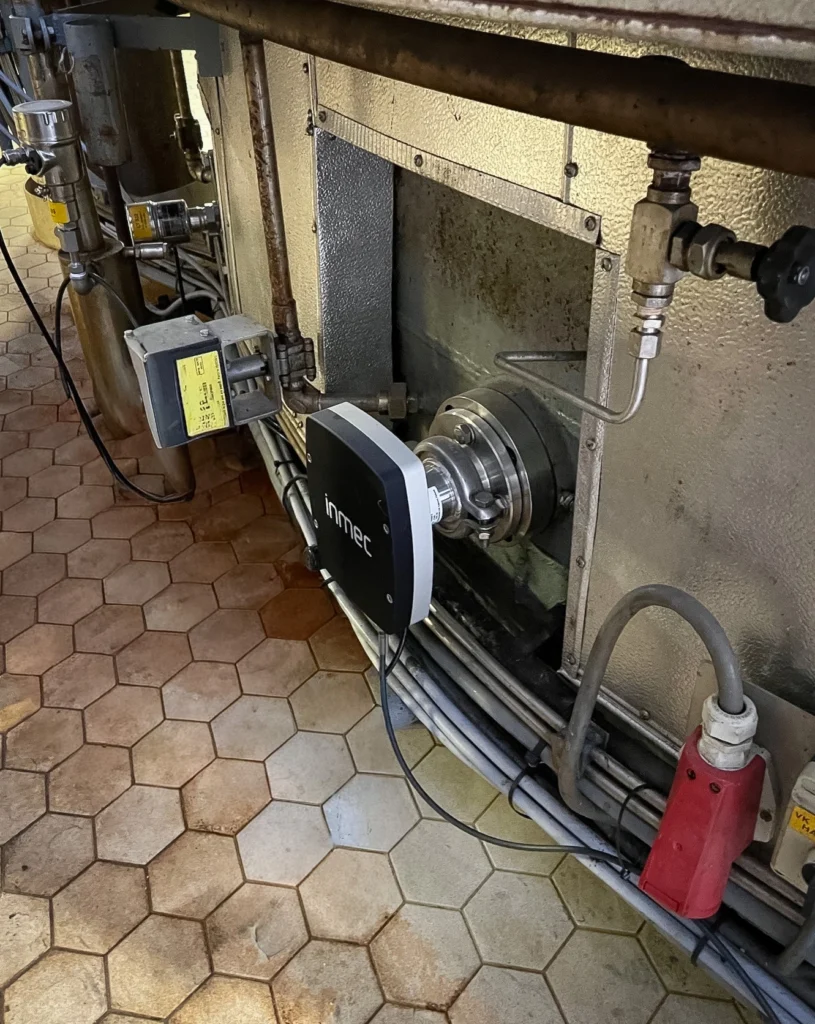
Enhanced Sugar Crystallizer Control with Inmec Ci Combination-Sensor
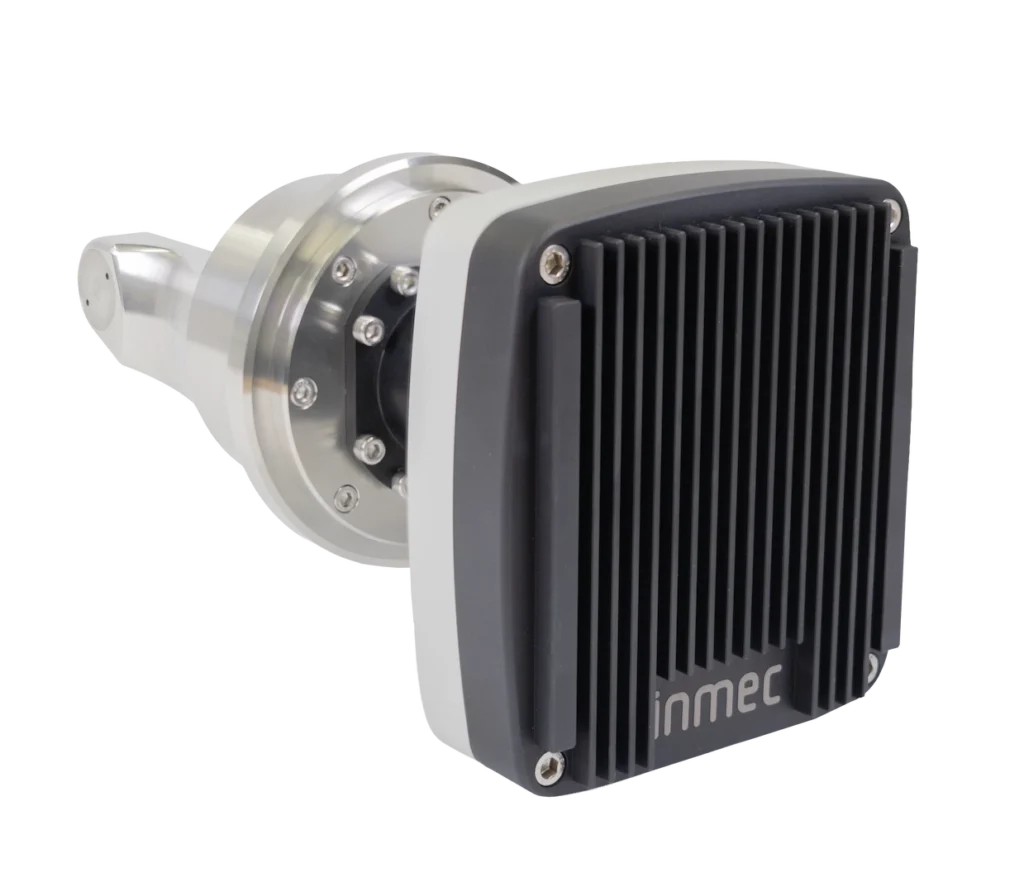
Inmec’s newly developed Ci Combination-Sensor provides a comprehensive view of sugar juice properties entering evaporation and crystallization. The sensor integrates multiple measurement principles into a single device.
Sugar juice contains several chemical compounds in addition to sucrose. Purity is defined as sucrose as a percentage of total dissolved solids. Total dissolved solids also include various ionically active components such as K⁺, Na⁺, Cl⁻, and organic acid salts.
Digital microwave measurement provides accurate and stable °Bx readings for seeding control, even under varying juice purities. However, as incoming juice purity fluctuates, the commonly used assumed purity value will not lead to a precise calculation of supersaturation. Therefore, a real-time purity estimate together with the °Bx reading is the way to obtain an enhanced, more accurate supersaturation value. Seeding executed exactly at the correct supersaturation point is essential for efficient crystallization.
The sensor combines the digital microwave °Bx reading with a measurement of ionic activity. The new i-Detector is integrated into the sensor structure, with its signals connected to the °Bx sensor processor. A sophisticated multivariable algorithm then provides an enhanced °Bx value along with a purity estimate. All data processing is executed within the sensor software, making the overall solution robust and self-contained, with no additional processing units or model tuning required by the user.
Precise Control Starts with Reliable Measurement
Vacuum pan crystallization depends on precise supersaturation control for consistent crystal size, quality and yield. Brix control directly affects yield, centrifugal performance and campaign efficiency, so the measurement must stay accurate and continuous through strikes of 2–8 hours at up to 98 °Bx. Inmec’s digital microwave sensors deliver stable Brix measurement from seeding to discharge, unaffected by coating, crystal content or high viscosity.
The Challenge: Why Vacuum Pans Are Demanding
High Brix Concentrations
Massecuite Brix levels range from around 80 °Bx at seeding to 91–98 °Bx at discharge, depending on the massecuite grade—well beyond the stable operating range of many optical sensors.
Long Batch Cycles
Strikes lasting 2-8 hours provide limited opportunity for sensor cleaning or intervention. Measurement must remain stable throughout.
Product Coating and Buildup
Sugar crystallization inherently creates coating on all wetted surfaces. Optical sensors lose accuracy as coating accumulates; cleaning requires production interruption.
Rapidly Changing Conditions
Temperature, pressure, viscosity, and crystal concentration all change continuously during the strike. Measurement must track these variations accurately.
Critical Control Dependency
Supersaturation control, strike timing, and batch repeatability all depend on reliable Brix data. Inaccurate measurement leads to inconsistent crystal quality and reduced yields.
The Solution: Digital Microwave Sensors in Crystallization
Extended Phase Range for Complete Strike Coverage
Digital microwave sensors measure phase shift across an extended range (up to 720° or 4π radians), enabling accurate measurement from the beginning to the end of each vacuum pan cycle.
This extended phase range is essential for crystallization applications where Brix changes dramatically—from seeding at around 80 °Bx through crystal growth to final massecuite at 91–98 °Bx.
The measurement algorithm handles this wide concentration span from a single sensor, maintaining accuracy throughout the complete strike without requiring manual intervention or sensor adjustments.
Bulk Measurement Unaffected by Crystal Content
Digital Microwave measurement captures total solids content—both dissolved sugars and suspended crystals—as massecuite concentration. As crystallization progresses and crystal content increases, the sensor continues measuring accurately because it’s measuring the bulk dielectric properties of the entire product volume, not relying on optical clarity.
This enables continuous measurement from seeding through crystal growth to final discharge, providing the data needed for supersaturation control and strike endpoint detection.
Coating Resistance Throughout the Strike
Product coating on sensor surfaces is inevitable during vacuum pan strikes. Sugar deposits accumulate on all wetted surfaces, including sensors, as massecuite boils and crystallizes.
Digital microwave measurement maintains accuracy despite this coating because the measurement volume extends into the bulk product, not just the surface layer. The sensor continues delivering stable Brix data even as coating accumulates during the 2-8 hour strike duration.
How Inmec Sensors Perform in Vacuum Pan Conditions
| Process Condition | Typical Vacuum Pan Environment | Inmec Sensor Performance |
|---|---|---|
| Brix range | 60-98% massecuite | Stable measurement across full concentration range |
| Batch duration | 2-8 hours per strike | No recalibration required between or during strikes |
| Operating temperature | 60-80°C under vacuum | Automatic temperature compensation |
| Coating/fouling | Heavy sugar buildup on all surfaces | Measurement unaffected by sensor surface coating |
| Crystal content | Increasing throughout strike | Measures total solids: dissolved sugars + suspended crystals |
| Viscosity | Very high at end of strike | Bulk measurement principle unaffected by viscosity |
Vacuum Pan Strike Timeline
Real Model IL data from sugar vacuum pans. Follow one strike stage by stage, or see how the trend repeats cycle after cycle.
Brix trend redrawn from a Model IL installation at a sugar vacuum pan. One full strike, about 3 h 20 min. Select a stage to see what happens in the pan and what the sensor shows.
Brix trend redrawn from a Model IL installation at a sugar vacuum pan. Nine consecutive strikes, each seeded at 79.5 °Bx.
Charging and Boiling Start
Strike StartThe pan is charged with syrup or standard liquor and boiling starts under vacuum. The Brix value at the start of the strike is the baseline for the whole cycle.
In the pan
- Pan charged with syrup or liquor
- Boiling under vacuum begins
- Charge concentration varies between strikes
What the sensor shows
- Starting value of about 68 °Bx in this strike
- Confirms the charge before concentration
- The same sensor stays in place for the whole strike
Concentration to Supersaturation
Approaching the Seeding PointWater is evaporated and Brix rises quickly towards the supersaturation zone. The rate of rise shows how fast the pan is approaching the seeding point.
In the pan
- Fast evaporation under vacuum
- Brix and viscosity rising
- Syrup approaching supersaturation
What the sensor shows
- Rise from about 68 to 80 °Bx in under half an hour
- Continuous trend instead of manual samples
- Signal for steam and feed control
Seeding
Seeding at the Right PointSeed is introduced when the syrup reaches the target supersaturation. Seeding at the same point in every strike is the basis for consistent crystal size.
In the pan
- Seed introduced at target supersaturation
- Crystal formation starts
- Timing decides crystal size distribution
What the sensor shows
- Seeding at around 80 °Bx in this strike
- A small dip in the trend at seeding
- Repeatable trigger for automated seeding
Crystal Growth and Tightening
Controlled Crystal GrowthCrystals grow as syrup is fed and water is evaporated, and the massecuite tightens towards the strike end. This is the longest phase of the strike.
In the pan
- Crystal content and viscosity increase
- Sugar coating builds up on wetted surfaces
- About 2.5 hours of growth in this strike
What the sensor shows
- Steady rise from about 82 to 91 °Bx
- The reading includes crystals and dissolved sugar
- No drift as coating accumulates
Strike End and Discharge
Repeatable Strike EndWhen the massecuite reaches its target, the pan is dropped and prepared for the next strike. The trend falls as the pan is emptied.
In the pan
- Target concentration reached
- Massecuite dropped from the pan
- Pan prepared for the next strike
What the sensor shows
- Strike end at about 91 °Bx in this strike
- Repeatable end point from cycle to cycle
- Ready for the next strike without recalibration
Cycle-to-Cycle Repeatability
Seeding at 79.5 °Bx, Strike After StrikeAcross nine consecutive strikes at a sugar vacuum pan, the Model IL showed the same Brix profile in every cycle, and seeding was launched precisely at 79.5 °Bx each time.
What the trend shows
- Seeding at 79.5 °Bx in every cycle
- The same Brix profile from strike to strike
- Strike end at about 91 °Bx each cycle
- No drift over the full period
What it means for the plant
- Consistent crystal quality
- Improved yield
- Energy savings
- Production efficiency
Crystallization Applications Across Sugar Production
Inmec sensors measure Brix in vacuum pans across cane and beet sugar production, from A-grade white sugar to B and C massecuite. Each sensor connects directly to your DCS or PLC as a 4–20 mA pan Brix transmitter.
White Sugar Crystallization (A Massecuite)
In high-purity white sugar strikes, continuous Brix measurement supports precise seeding, controlled crystal growth and repeatable strike end detection, giving consistent crystal quality for refined sugar.
Raw Sugar and B/C Massecuite Crystallization
Low-grade strikes run longer and at higher Brix, with more impurities and heavier coating. The wide measuring range covers every massecuite grade, so the same sensor type runs A, B and C strikes without recalibration and supports sugar recovery.
Continuous Vacuum Pan Systems
In continuous pans, a drift-free Brix signal enables closed-loop control of feed rate and discharge, with no recalibration stops in continuous operation.
“The Brix measurement stays stable throughout long vacuum pan strikes, even with significant buildup. This improved operator confidence and batch repeatability.”
— Process Engineer, Sugar Processing (Europe)
Get in Touch About Your Crystallization Process
Share your process details and our crystallization measurement experts will be in touch within one business day.
Featured Sensors for Crystallization
Vacuum pan crystallization: frequently asked questions
Can’t find what you’re looking for? Share your process details in the form above and our engineers will recommend the right sensor.
How does digital microwave measurement benefit vacuum pan crystallization?
A strike runs from syrup feed at around 60 °Bx, through seeding at around 80 °Bx, to 91–98 °Bx at discharge, depending on the massecuite grade, over 2–8 hours, with heavy sugar coating and rising crystal content. Inmec’s digital microwave sensors measure phase shift over an extended range of up to 720°, so a single sensor covers the whole strike without adjustment. The measurement extends into the bulk massecuite, so coating does not cause drift and crystals are included in the reading.
What makes Inmec’s measurement digital?
Two technologies. Digital Signal Synthesis (DSS) precisely synchronizes the microwave signals transmitted and received through the product, giving a high-resolution, noise-free and stable measurement. Inmec’s Multivariable Measuring Algorithm (MMA) processes the signal inside the sensor and enables the wide Brix range needed to follow a complete strike.
Which Inmec sensor is used in vacuum pans?
Inmec offers two digital microwave sensors for vacuum pans. The Inmec Ci Combination-Sensor integrates °Bx measurement and ionic activity measurement into a single device, providing an enhanced °Bx value and a real-time purity estimate for a more accurate supersaturation value. The Model IL is Inmec’s proven vacuum pan sensor, providing accurate and stable °Bx readings up to 99 °Bx for seeding control and strike end. Both install in the pan wall.
Can the sensor be installed in an existing vacuum pan nozzle?
Yes. The Model IL is an all-in-one sensor with no separate transmitter, installed with a clamp, weld ring and O-ring gasket. Optional bolt flange adapters to DIN and ANSI standards allow installation on existing pan nozzles.
Can the sensor measure massecuite with a high crystal content?
Yes. Digital microwave measurement responds to total solids, both dissolved sugar and suspended crystals, so the reading follows crystallization continuously as crystal content increases. It does not rely on optical clarity.
Does sugar coating on the sensor affect the Brix reading?
No. Coating builds up on every wetted surface during a strike, but the measurement volume extends into the bulk product, not just the surface layer. The sensor keeps a stable Brix reading as coating accumulates through 2–8 hour strikes.
Can Inmec sensors be used for supersaturation control and seeding?
Yes. The stable Brix signal is suitable for supersaturation control, seeding timing and automated strike endpoint detection. In an Inmec vacuum pan installation, seeding was launched precisely at 79.5 °Bx strike after strike, giving consistent crystal quality and yield from cycle to cycle. Where juice purity fluctuates, the Inmec Ci adds a real-time purity estimate for a more accurate supersaturation value. See the repeatability trend.
Does the sensor need cleaning or recalibration between strikes?
No. Inmec sensors run without recalibration between or during strikes, and coating does not require cleaning stops. This avoids the production interruptions and manual sampling that optical sensors often need.
What is the Inmec Ci Combination-Sensor?
The Inmec Ci is a combination sensor that integrates digital microwave °Bx measurement and ionic activity measurement into a single device. The i-Detector is built into the sensor structure, and a multivariable algorithm provides an enhanced °Bx value along with a real-time purity estimate. All data processing runs within the sensor software, with no additional processing units or model tuning required by the user.
Do I need a separate Brix sensor if I use the Inmec Ci?
No. The Inmec Ci measures °Bx with the same digital microwave technology as the Model IL and provides the enhanced °Bx value used for vacuum pan control. The purity estimate comes from the same device, so one sensor covers the measuring point.
Why does juice purity matter for supersaturation?
Purity is sucrose as a percentage of total dissolved solids, which also include ionically active components such as K⁺, Na⁺, Cl⁻ and organic acid salts. Supersaturation is commonly calculated using an assumed purity value, so when incoming juice purity fluctuates, the calculation loses precision. A real-time purity estimate together with the °Bx reading gives a more accurate supersaturation value, so seeding can be executed at the correct supersaturation point.
Do Inmec sensors work in both batch and continuous vacuum pans?
Yes. Inmec sensors control crystallization in batch and continuous vacuum pans, including A, B and C massecuite strikes and raw sugar pans.
How do temperature and pressure changes during the strike affect the reading?
Vacuum pans typically operate at 60–80 °C under vacuum, with temperature, pressure and viscosity changing throughout the strike. Inmec sensors compensate for temperature automatically, and the bulk measurement is not affected by viscosity.
Why do refractometers struggle in vacuum pans?
Refractometers measure at an optical surface. During a strike, sugar coating on that surface causes drift, so operators have to clean the sensor between batches or rely on manual sampling. Many optical sensors are also not stable at the 91–98 °Bx reached at discharge.