Continuous Solids Measurement for Evaporation and Dewatering Processes
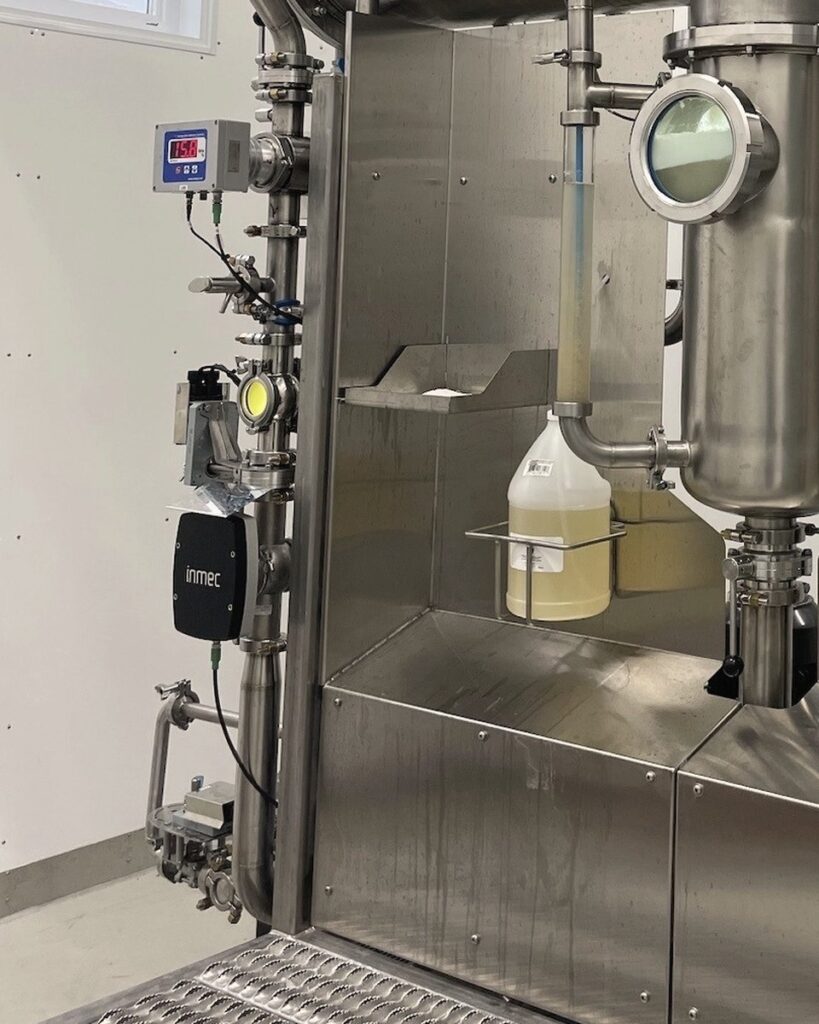
Efficient Water Removal Starts with Accurate Measurement
Water removal from substances is commonly achieved through two primary methods: Evaporation and mechanical separation. These processes are among the most demanding stages in industrial production across food and beverage, sugar, mining, and other process industries.
Inmec’s total solids and Brix sensors are built for optimizing water removal processes—whether through evaporation, mechanical dewatering, or both—across food and beverage, sugar, and other industrial applications.
In these applications, instrumentation must meet exceptionally high demands. Measurement needs to cover a wide range, from initial concentration levels to the final target. At the same time, devices must remain stable without frequent recalibration and continue to perform reliably despite material buildup on sensor surfaces between cleaning cycles.
The Challenge: Why Water Removal Processes Are Demanding
Wide Concentration Range
Measurements must remain accurate across a broad range—from dilute feed (8–15 %TS) to highly concentrated product (60–70 %TS). The wide span challenges most conventional sensors.
Extended Production Campaigns
Evaporators often operate continuously for extended periods, with limited opportunities for shutdown. Sensors must therefore maintain long-term stability without the need for frequent recalibration.
Mechanical Water–Solids Separation
Mechanical units, such as belt presses and decanters, are widely used for physical separation of water-solids. Total solids measurement is vital for efficient process control. The solids content of sludges and slurries entering separation presses or decanters must be accurately controlled to ensure efficient water/solids separation. Poor performance can result in significant energy loss, excessive additive consumption, and increased environmental impact.
Buildup Tolerance
Concentration processes inherently lead to material accumulation, such as mineral deposits on wetted surfaces. These deposits can form over relatively short periods, degrading sensor performance or even rendering them unusable. The high buildup tolerance of Inmec sensors is therefore essential for reliable long-term measurement.
The Solution: Why Inmec Digital Sensors Work Better in Evaporators
Surface-dependent optical sensors struggle in evaporators
Coating from sugar, protein, or product deposits on optical windows causes drift over time. High-temperature operation and long campaigns accelerate optical surface degradation.
Inmec sensors measure bulk product properties
Digital microwave measurement extends into the product volume—unaffected by coating on sensor surfaces. Temperature compensation maintains accuracy across varying evaporator conditions.
The practical difference:
Optical sensors often require cleaning between campaigns or deliver unreliable data during extended runs. Inmec sensors maintain stable measurement throughout, supporting better control and reducing maintenance interruptions.
How Inmec Sensors Perform in Water Removal Applications
| Process Condition | Typical Measurement Environment | Inmec Sensor Performance |
|---|---|---|
| Solids range | 8–70 % TS or °Bx (feed to concentrate) | Stable measurement across full range |
| Campaign duration | Weeks to months of continuous operation | No drift, no recalibration needed |
| Operating temperature | 50–120 °C across effects | Automatic temperature compensation |
| Coating | Sugar, protein, or product deposits | Measurement unaffected by surface coating |
| Measurement locations | Feed, inter-effect, discharge | Consistent performance across all points |
| Product variations | Suspended solids, pulp, particles | Measures dissolved + suspended components |
Water Removal Applications Across Industries
Industrial processes almost without exception begin with a stage where dissolved or suspended, organic or inorganic solids components are mixed with water. From these basic raw materials and recipe-specific ingredients, a low-solids mixture is formed — a slurry, juice, broth, wort, sap, or another process compound depending on the application. Further on, these mixture substances are commonly concentrated by removing water.
Inmec sensors provide solids measurement in diverse processes—from evaporators in the food & beverage industry to sludge and slurry decanters and presses in other industries.
Evaporators & Vacuum Pans
Continuous Brix measurement through multi-effect evaporators in cane and beet sugar production ensures the final target Brix and a uniform juice feed to the vacuum pans.
In batch and continuous vacuum pans, Inmec sensors control crystallization from syrup concentration through to the final massecuite discharged to the centrifuges.
Juice & Beverage Concentration
Total solids measurement from fresh juice through the evaporator to final concentrate supports product quality, energy efficiency and a consistent concentrate for storage and further production.
Inmec sensors measure total solids including dissolved sugars and suspended fruit pulp.
Whey & Lactose Evaporators
Measurement and control of whey and lactose evaporators supports consistent process efficiency and a uniform target concentration.
Inmec sensors are available in 3-A certified versions that meet sanitary requirements and withstand CIP cycles without performance degradation.
Mechanical Dewatering
The solids content of sludges and slurries entering decanters and belt presses must be accurately controlled for efficient water–solids separation.
Continuous total solids measurement reduces energy use and additive consumption and limits environmental impact.

Feed to Final Concentrate
One sensor covers the full span from dilute feed at 8–15 % TS to final concentrate at 60–70 % TS.

Lower Steam Use
Continuous measurement at the evaporator outlet holds the target concentration, cutting over-concentration and wasted steam.

3-Year Warranty
A full, industry-leading warranty reflecting confidence in long-term performance through continuous campaigns.
“We needed stable Brix measurement in our evaporator discharge line. The 4″ pipeline P4 sensor handles high concentrations and coating without signal drift — reliable data for our concentration control throughout the season.”
— Process Engineer, Beet Sugar Factory (Spain)
Let’s Improve Your Evaporation and Dewatering Application
Give us a brief description of your measurement process and our experts will get in touch.
Evaporation and dewatering measurement: frequently asked questions
Can’t find what you’re looking for? Share your process details in the form above and our engineers will recommend the right sensor.
How is total solids measured inline in an evaporator?
With a digital microwave sensor installed directly in the process line or vessel. It measures how a microwave signal changes as it passes through the product, which gives total solids or Brix continuously, without sampling.
Which Inmec sensor is used in evaporators?
Model P2 to P10 in process pipelines, sized to the line from 2″ to 10″. Model P-TC in 1.5–3″ sanitary lines, with 3-A certified versions for dairy and food. Model IL in evaporator bodies and tanks, and Model IL-G in sanitary tanks. The Inmec Ci where purity is low or conductivity is high. See also sugar processing applications.
Where should Brix or total solids be measured in a multi-effect evaporator?
At the feed, between effects and at the discharge. Feed measurement catches variation early, inter-effect points show how concentration builds, and discharge measurement holds the final target.
Can one sensor cover the range from feed to final concentrate?
Yes. Digital microwave measurement covers dilute feed at 8–15 % TS through to final concentrate at 60–70 % TS without changing the measurement principle.
How does inline measurement reduce steam use?
A continuous signal at the evaporator outlet lets the control system hold the target concentration, avoiding over-concentration that wastes steam and can damage the product.
Does fouling or coating affect the reading?
No. The measurement extends into the product volume, so deposits from sugar, protein or minerals on the sensor surface do not cause drift during long runs.
How do temperature changes between effects affect the measurement?
Inmec sensors compensate for temperature automatically, so readings stay accurate from about 120 °C in the first effect down to 50 °C in the last.
What is the difference between total solids and Brix?
Brix is dissolved solids, mainly sugars. Total solids also includes suspended material such as pulp, protein and particles. Inmec sensors measure total solids and can report the value as % TS, °Bx or density.
Can Inmec sensors be used in whey and dairy evaporators?
Yes, with 3-A certified versions that withstand daily CIP. Concentrated whey and permeate can approach the 13 mS/cm conductivity limit, so the product should be checked before selection. See juice and dairy concentration.
Can Inmec sensors control decanters and belt presses?
Yes. Model P2 to P10 pipeline sensors measure the total solids of the sludge or slurry feed continuously, so dosing and separation can be controlled to reduce energy and additive use.