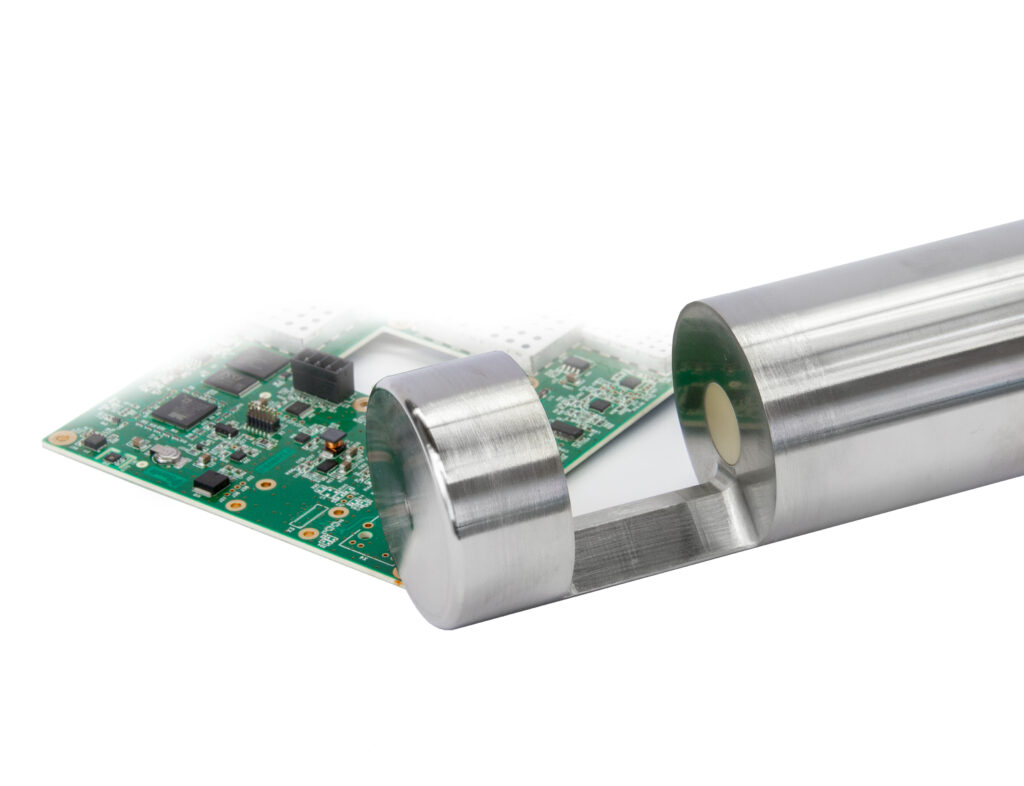
Measurement Solutions for Food & Beverage Processing
Stable sanitary Brix sensor performance throughout the process—from extraction to final quality monitoring
Measurement Challenges Across Food & Beverage Production
Whether processing fruit juice, beverages, dairy products, or liquid foods, these measurement challenges remain consistent: surface fouling from pulp, protein, and natural product components; frequent CIP cycles that demand a CIP compatible Brix sensor built for unlimited cleaning; and applications with suspended solids — pulp, fruit particles, protein — that require measurement technology capable of seeing beyond the surface.
Food and beverage processing demands continuous, reliable concentration measurement across diverse applications—from thin juice at 8°Brix through concentrated syrups at 80°Brix, hygienic processes requiring 3-A certification, and production environments where product coating, temperature variations, and strict sanitary standards must all be managed simultaneously.
Inmec Solutions for Food and Beverage
Inmec’s digital microwave sensors deliver stable concentration measurement throughout food & beverage production—from raw juice processing through concentrate production and blending. The technology measures total solids content including both dissolved and suspended components, remains unaffected by surface coating, and maintains performance through unlimited CIP/SIP cycles—meeting the demanding requirements typical of food manufacturing.
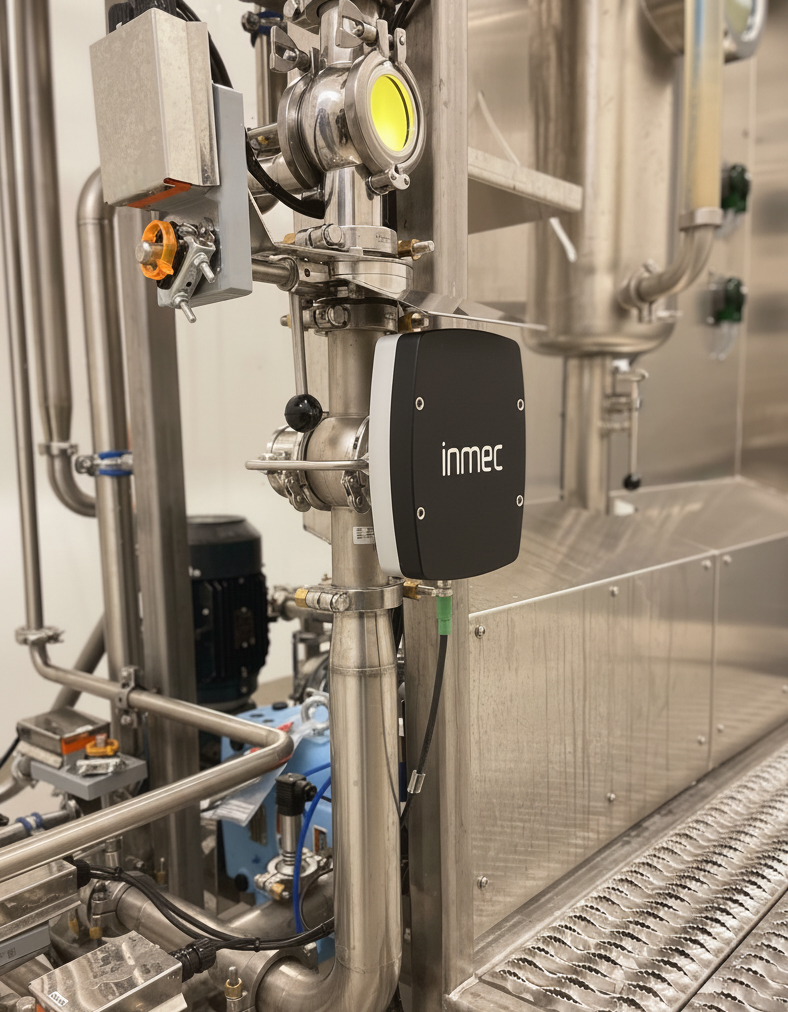
Pictured: P2TC Sensor in a syrup evaporator pipeline — solving some of the toughest measurement challenges in food production
Digital Microwave vs. Optical Measurement: Performance in Food & Beverage
Food & beverage processors have traditionally relied on optical measurement solutions, but the technology shows clear limitations in modern hygienic production environments.
The practical difference: Optical measurement solutions struggle with the realities of food & beverage processing—pulp, particles, frequent CIP cycles, and hygienic requirements. Inmec sensors are engineered specifically for these demanding sanitary applications.
| Process Condition | Optical Measurement | Inmec Digital Microwave Sensors |
|---|---|---|
| Suspended solids (pulp, particles) | Cannot measure (blocks optical path) | Measures dissolved + suspended solids |
| Product coating | Requires frequent cleaning | Unaffected by surface fouling |
| CIP durability | Optical windows degrade over time | No performance degradation |
| Hygienic certification | Limited 3-A certified options | 3-A certified for food contact |
| Measurement range | Often limited at high concentrations | Stable from 0-95°Brix |
| Temperature compensation | Manual or limited | Automatic compensation |
| Long-term stability | Drift requires recalibration | No drift, no recalibration needed |
| Maintenance effort | High (cleaning, window replacement) | Minimal (CIP compatible) |
Proven Across Food & Beverage Applications
From juice extraction through beverage blending and dairy processing, Inmec sensors support measurement where hygienic standards, process reliability, and product quality converge.
Pulp, Protein, and Constant Cleaning
Juice and dairy concentration push sensors through suspended pulp, protein fouling, and unlimited CIP/SIP cycles—all while covering an 8-75°Brix range from fresh feed to final concentrate. See how Inmec sensors handle juice and dairy concentration →
Juice & Concentrate Production:
- Fresh juice extraction and clarification
- Evaporator concentration control
- Concentrate storage and reconstitution
- Juice blending and standardization
- Fruit pulp and puree processing
Beverage Manufacturing:
- Soft drink syrup preparation
- Beverage blending and mixing tanks
- Sugar dissolution and syrup storage
- Product concentration control
- Carbonated and non-carbonated beverages
Dairy Processing:
- Milk processing
- Whey concentration monitoring
- Yogurt and fermented product processing
- Dairy ingredient blending
- Lactose and milk sugar streams
Liquid Food Production:
- Sauce and condiment processing
- Soup and broth concentration
- Dessert and pudding manufacturing
- Baby food and nutritional products
- High-viscosity product processing
Why Food & Beverage Producers Choose Inmec

Hygienic Design with 3-A Certification
3-A certified sensors meet the strictest sanitary standards for food-contact applications. CIP and SIP compatible, with Aisi 316L stainless steel construction and no optical windows that can harbor bacteria or degrade over time.

Measures Through Pulp and Suspended Solids
Digital microwave technology measures total solids content—both dissolved sugars and suspended pulp, fruit particles, or protein—delivering stable readings where optical sensors see only interference.

Stable Throughout Production Runs
No signal drift from coating or fouling. No routine recalibration between batches. Continuous, reliable measurement data throughout extended production runs and multiple CIP cycles.
Get in Touch About Your Food or Beverage Process
Share your process details and our measurement experts will be in touch within one business day.
Featured Sensors for the Food and Beverage Industry
Engineered for hygienic applications: 3-A certified, CIP/SIP compatible, and proven in juice processing, beverage manufacturing, and dairy operations.
What Makes Digital Microwave Measurement Different
Refractometers measure at an optical interface
Light passes through a prism or window that must remain perfectly clean and clear. Fruit pulp, protein deposits, or any surface coating blocks the optical path and causes measurement failure. Repeated CIP cycles can etch optical surfaces, degrading performance over time.
Inmec sensors measure bulk product properties
The microwave measurement volume extends into the product—measuring both dissolved solids and suspended particles as total solids content. Surface coating doesn’t affect measurement accuracy. The stainless steel measurement surface withstands unlimited CIP/SIP cycles without degradation.
The result: Food & beverage processing involves suspended solids and frequent cleaning—it’s unavoidable. Inmec’s technology is designed specifically to handle both while maintaining hygienic standards. For food & beverage producers looking for a reliable inline refractometer alternative, the difference is consistent measurement through every CIP cycle without surface degradation.