Brix Measurement for Sugar Processing Applications
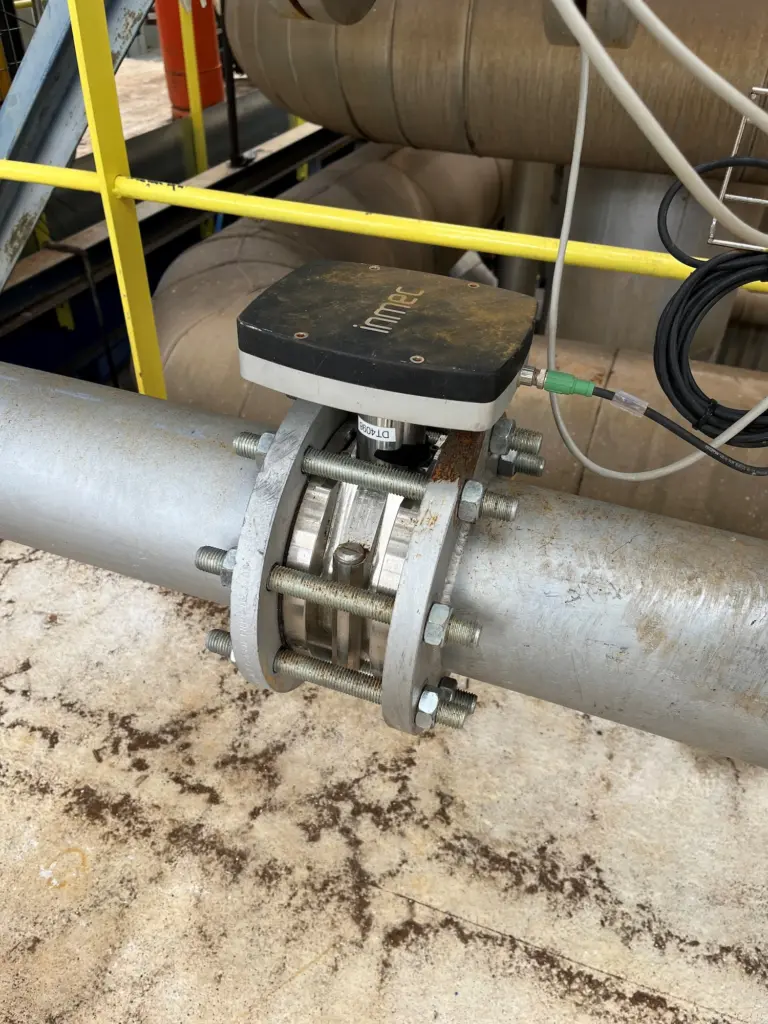
Reliable Measurement Throughout Sugar Production
Brix measurement is critical at every stage of sugar processing—from extraction and clarification through evaporation, crystallization, melting, and molasses recovery—each stage demanding something different, from 10-15°Brix extraction juice to 98°Brix massecuite.
Coating and buildup on sensor surfaces are unavoidable in sugar processing, campaigns run for weeks or months without a real opportunity to shut down and recalibrate, and Brix levels swing from single digits to nearly 100% within the same production line. Inmec’s digital microwave sensors address each of these challenges at the stage where it occurs—from thin juice through to massecuite.
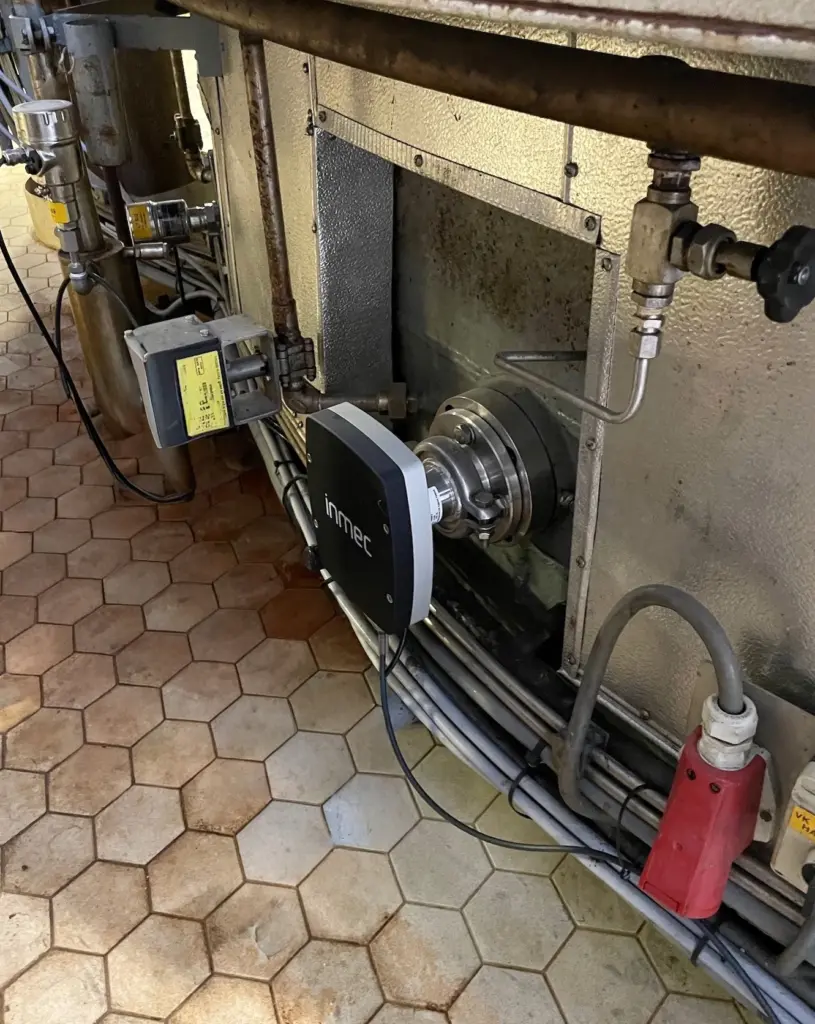
The Toughest Stage in the Process
Vacuum pan crystallization pushes every one of these challenges to its limit—Brix approaching 100%, continuous coating, and a reset cycle repeating at every strike. See how Inmec sensors handle vacuum pan crystallization →
The Challenge: Why Sugar Processing Demands Robust Measurement
Wide Brix Range Requirements
Measurement must span from dilute extraction juice (10-15°Brix) through intermediate evaporation stages (30-65°Brix) to final crystallization (75-98°Brix)—a range that exceeds the stable operating capability of many conventional sensors.
Product Coating and Buildup
Sugar processing inherently creates coating on all wetted surfaces. Many sensors lose accuracy as buildup accumulates; cleaning requires production interruption and recalibration.
Suspended Solids and Crystals
Juice streams contain fibers and bagasse particles. Crystallization processes transition from fully dissolved sugar to high crystal content. Many measurement technologies cannot function with suspended material.
Long Campaign Operation
Production campaigns run continuously for weeks (cane) to months (beet) with limited maintenance windows. Measurement must remain stable throughout without drift or recalibration.
Critical Control Dependency
Evaporator efficiency, crystallization quality, and overall yield depend on reliable Brix data. Inaccurate measurement leads to energy waste, inconsistent product quality, and reduced recovery.
The Solution: Why Inmec Digital Sensors Work Better in Sugar Processing
Optical sensors struggle with sugar process conditions
Fiber and suspended solids block optical paths in juice streams. Non-sugar components and colorants interfere with measurement. High-viscosity molasses creates coating that degrades accuracy. Frequent cleaning interrupts production.
Inmec sensors measure bulk product properties
Digital Microwave measurement extends into the product volume—measuring total solids including dissolved sugars and suspended components. Unaffected by color, viscosity, or coating on sensor surfaces. No cleaning interruptions during campaigns.
The practical difference:
Optical sensors require clean, controlled conditions to maintain accuracy. Inmec sensors deliver reliable data in the real conditions of sugar processing—fiber content, non-sugars, coating, and high viscosity.
How Inmec Sensors Perform in Sugar Processing
| Process Condition | Typical Sugar Environment | Inmec Sensor Performance |
|---|---|---|
| Brix range | 10-98% across applications | Stable measurement across full concentration range |
| Batch/campaign duration | Weeks to months continuous | No recalibration required during campaigns |
| Operating temperature | 60-120°C depending on stage | Automated temperature compensation |
| Coating/fouling | Heavy sugar buildup inevitable | Measurement unaffected by sensor surface coating |
| Crystal content | Varies from none to high concentration | Measures dissolved + suspended solids |
| Fiber/suspended solids | Bagasse, pulp, impurities | Bulk measurement captures total solids |
| Viscosity | Very high in massecuite/molasses | Unaffected by viscosity changes |
Sugar Processing Applications
Select a process stage to see where Inmec sensors measure and what they solve.
Juice Extraction and Diffusion
Extraction Efficiency OptimizationContinuous Brix measurement in diffusers and extraction lines shows extraction efficiency in real time and reveals process variations early.
Typical applications
- Cane diffuser discharge monitoring
- Beet diffusion juice measurement
- Mixed juice concentration control
- Process troubleshooting
Measurement challenges
- Suspended bagasse, fiber and pulp particles
- Non-sugar components and impurities
- Low and variable Brix (typically 10–18 °Bx)
- Coating from natural juice components
- Lab sampling is too slow for process control
Inmec solution
Digital microwave measurement responds to total solids, both dissolved sugars and suspended particles. Fiber content and coating from juice components do not disturb the reading. Continuous data replaces lab sampling for real-time extraction control.
Sensors: Model P2–P10 in extraction and mixed juice lines, Model IL in diffuser and juice tanks.
Juice Clarification
Quality Control Through Clarification StagesBrix monitoring through clarification verifies clarifier performance and keeps the juice going to evaporation consistent.
Typical applications
- Clarified juice monitoring
- Filter station concentration control
- Juice transfer line measurement
- Quality verification before evaporation
- Process stream standardization
Measurement challenges
- Residual suspended solids after clarification
- Coating from lime and carbonation residues
- Temperature variations between process stages
- Several measurement points with different conditions
- Long-term stability needed without recalibration
Inmec solution
Measurement stays stable despite residual solids and coating. Sensors install in tanks or transfer lines for continuous readings. No drift over a full campaign, so no stops for recalibration.
Sensors: Model IL in clarifier and juice tanks, Model P2–P10 in transfer lines to evaporation.
Multi-Effect Evaporation
Energy-Efficient Concentration ControlContinuous Brix measurement across the evaporator train lets you control steam consumption, hold the target syrup concentration and deliver consistent feed to the vacuum pans.
Typical applications
- Thin juice to thick juice concentration
- Monitoring between evaporator effects
- Syrup discharge concentration control
- Steam and energy optimization
Measurement challenges
- Wide range, from 15 °Bx thin juice to 65 °Bx syrup
- Temperatures from about 120 °C in the first effect down to 55 °C in the last
- Coating builds up during long runs
- Several measurement points across the effects
- High steam cost demands tight control
Inmec solution
One sensor covers the full span from thin juice to syrup. Temperature compensation keeps readings accurate as process temperature changes. Coating resistance allows continuous operation through the campaign, and the stable signal is suitable for closed-loop evaporator control.
Sensors: Model P2–P10 in lines between effects and at syrup discharge, Model IL in evaporator bodies and syrup tanks.
Vacuum Pan Crystallization
Supersaturation Control Throughout the StrikeStable Brix measurement from seeding through crystal growth to discharge, for consistent strikes and crystal quality in A, B and C massecuite pans.
Typical applications
- A massecuite (white sugar) strikes
- B and C massecuite crystallization
- Raw sugar pans
- Continuous vacuum pans
- Seeding and growth phase control
- Strike endpoint detection
Measurement challenges
- Very high Brix (80–98 °Bx massecuite)
- Long batch cycles (2–8 hours per strike)
- Heavy sugar buildup on wetted surfaces
- Rapidly changing temperature, pressure, viscosity and crystal content
- Coating makes conventional sensors drift during the strike
Inmec solution
The sensor measures total solids, dissolved sugar plus suspended crystals, so the reading follows crystallization continuously. Coating resistance keeps accuracy through 2–8 hour strikes without cleaning. The stable signal is suitable for supersaturation control and automated strike timing.
Digital measurement advantage: The digital microwave platform extends phase measurement over two full cycles (720°, or 4π radians). This covers the whole strike in one range, from seeding at around 80 °Bx to final discharge at 91–98 °Bx. Conventional sensors are limited to a narrower concentration span.
Sensors: Model IL in the pan wall, Inmec Ci for enhanced supersaturation control.
Sugar Melting and Dissolving
Dissolution Monitoring and ControlContinuous measurement during melting and dissolving confirms that every batch reaches its target concentration.
Typical applications
- Sugar melt tank monitoring
- Affination process control
- Remelt liquor measurement
- Dissolving tank concentration
- Recycle stream monitoring
Measurement challenges
- Concentration changes rapidly during dissolution
- Undissolved crystals present during melting
- Temperature variations
- Target concentration must be verified before downstream use
- Several tanks or dissolving stations to monitor
Inmec solution
Real-time measurement follows concentration as the sugar dissolves, including crystals not yet dissolved. Fast response makes the signal usable for control, and stable readings confirm the target before the liquor moves on.
Sensors: Model IL in melt and dissolving tanks, Model P2–P10 in remelt liquor lines.
Molasses Handling and Recovery
Quality Control and Recovery OptimizationContinuous Brix measurement in molasses storage, transfer and recovery supports quality control, blending and sugar recovery.
Typical applications
- Final molasses storage and transfer
- Molasses quality verification
- Recovery process monitoring
- Molasses dilution control
- Blending and standardization
Measurement challenges
- Very high Brix (typically 75–85 °Bx)
- High viscosity
- Dark color, low purity and high conductivity
- Coating from molasses residues
- Long storage periods need stable measurement
- Concentration varies in recovery and dilution
Inmec solution
The measurement range covers both concentrated molasses and diluted recovery streams. Digital microwave measurement extends through the bulk of the product, so viscosity and color do not affect the reading. Coating resistance keeps accuracy through storage and transfer.
Sensors: Inmec Ci recommended for low-purity, high-conductivity molasses; Model IL in storage tanks and Model P2–P10 in transfer lines.
“We needed stable Brix measurement in our evaporator discharge line. The 4″ pipeline P4 sensor handles high concentrations and coating without signal drift — reliable data for our concentration control throughout the season.”
— Process Engineer, Beet Sugar Factory (Spain)
Let’s Improve Your Sugar Manufacturing Application
Give us a brief description of your measurement process and our experts will get in touch.
Sugar processing Brix measurement: frequently asked questions
Can’t find what you’re looking for? Share your process details in the form above and our engineers will recommend the right sensor.
Where is Brix measured in a sugar factory?
In extraction or diffusion juice, through clarification, across the evaporator train from thin juice to syrup, in vacuum pans, in melting and remelt, and in molasses handling. Inmec digital microwave sensors measure at each of these points with the same measurement principle.
Which Inmec sensor is used at each stage of sugar processing?
Model IL in tanks and vessels, including diffusers, clarifiers, evaporator bodies, vacuum pans, melters and storage tanks. Model P2 to P10 in pipelines, sized to the line from 2″ to 10″. The Inmec Ci where purity is low or conductivity is high, such as low-grade massecuite and molasses, in tanks or larger pipelines.
Can one measurement technology cover the full range from thin juice to massecuite?
Yes. Digital microwave measurement covers the sugar process from about 10 °Bx extraction juice to 98 °Bx massecuite. Each sensor is factory configured for the range at its measuring point.
How does digital microwave Brix measurement work?
The sensor measures how a microwave signal changes as it passes through the product. That change depends on the product’s water content, which gives total solids. Digital Signal Synthesis (DSS) keeps the signal precise and stable, and Inmec’s Multivariable Measuring Algorithm (MMA) enables the wide Brix range.
How do digital microwave sensors compare with refractometers in sugar processing?
Refractometers measure dissolved solids at a prism surface, so coating, fibre and suspended particles can disturb the reading. Digital microwave measurement extends into the product volume and measures total solids, including suspended material. Colour, viscosity and surface coating do not affect it. Read more in our comparison of optical and digital microwave Brix sensors.
Does sugar coating on the sensor affect the reading?
No. Because the measurement extends into the bulk product, coating on wetted surfaces does not cause drift, and there are no cleaning stops.
Do the sensors need recalibration during a campaign?
No. Inmec sensors run through campaigns of weeks or months without recalibration.
Can Inmec sensors measure juice containing bagasse, pulp or fibre?
Yes. The reading includes both dissolved sugars and suspended particles, so fibre content does not disturb extraction and diffusion measurement.
How does inline Brix measurement improve evaporator control?
Continuous Brix at each effect and at syrup discharge lets the control system hold the target syrup concentration, reduce steam use and give the vacuum pans a consistent feed.
Can Inmec sensors measure molasses?
Yes. Digital microwave measurement covers concentrated final molasses as well as diluted recovery streams, and high viscosity and dark colour do not affect the reading. Because molasses is low in purity and high in conductivity, the Inmec Ci is recommended: its integrated ionic activity measurement compensates for purity changes.
Are Inmec sensors used in both cane and beet sugar production?
Yes, in cane and beet factories, from short cane campaigns to beet campaigns running for months.
Which Inmec sensor is used in vacuum pans?
The Inmec Ci Combination-Sensor, which provides an enhanced °Bx value and a real-time purity estimate, and the Model IL, Inmec’s proven vacuum pan sensor. See vacuum pan crystallization.
How do the sensors connect to the control system?
Each sensor gives a 4–20 mA Brix and temperature signal directly to the DCS or PLC, with automatic temperature compensation. No separate transmitter is needed.