Continuous Solids Measurement for Juice and Dairy Concentration Processes

Precision Concentration for Quality Food Products
Juice and dairy concentration processes demand precise total solids control to maintain product quality, optimize energy efficiency, and ensure consistent final product specifications. From fruit juice evaporation through whey and lactose concentration, these processes operate under strict hygienic requirements while managing challenging measurement conditions—suspended pulp, protein fouling, wide concentration ranges, and frequent CIP cycles that require a CIP compatible Brix sensor that holds calibration after every clean.
Evaporator performance directly impacts product quality and operating costs. Over-concentration wastes energy and can degrade product characteristics. Under-concentration reduces yield and creates inconsistent downstream processing. Accurate, continuous measurement enables operators to hit target concentrations precisely while minimizing energy consumption.
Inmec’s sanitary sensors deliver stable total solids measurement throughout juice and dairy concentration processes, measuring dissolved sugars and suspended pulp in juice and monitoring whey and lactose concentration in dairy. The Model P-TC measures in 1.5–3″ sanitary process lines and is available in a 3-A certified version; the Model IL-G measures in sanitary tanks and vessels with a flush GEA Varivent connection. Both are CIP compatible and hold their calibration through repeated cleaning cycles.
The Challenge: Why Juice and Dairy Concentration Demands Robust Measurement
Wide Concentration Ranges
Measurement must span from dilute feed (8-15°Brix fresh juice, 5-10% solids in whey) through concentrated discharge (60-75°Brix concentrate, 40-60% solids in concentrated whey)—a range that challenges many conventional measurement technologies.
Suspended Solids and Particles
Fruit juice contains pulp, fibers, and natural particles. Dairy products contain protein, fat, and casein particles. Many measurement technologies cannot function when suspended material is present.
Buildup Tolerance
Natural product components—pulp in juice, protein and fat in dairy—create coating on sensor surfaces during production runs. This fouling causes signal drift and requires frequent cleaning with conventional sensors.
Hygienic Requirements
Dairy applications typically require 3-A certification, and all food and beverage applications need CIP compatibility and sanitary design. Equipment must withstand aggressive cleaning chemicals and repeated temperature changes between production and cleaning.
Energy Optimization
Evaporation consumes significant energy. Precise concentration control minimizes energy waste while maintaining product quality—accurate measurement is essential for optimization.
How Inmec Sensors Perform in Juice and Dairy Evaporation
| Process Condition | Typical Environment | Inmec Sensor Performance |
|---|---|---|
| Concentration range | 5-75% depending on product | Stable measurement across wide ranges |
| Suspended solids | Pulp, protein, fat particles | Measures total solids: dissolved + suspended |
| Operating temperature | 60-90°C during processing | Automated temperature compensation |
| CIP cycles | Multiple cycles per day/week | CIP compatible, no recalibration after cleaning |
| Product coating | Pulp, protein, fat buildup | Measurement unaffected by sensor surface coating |
| Hygienic standards | 3-A certification required | 3-A certified models available |
| Batch duration | Hours to continuous operation | No recalibration during production |
Juice and Dairy Concentration Applications
Select a process stage to see where Inmec sensors measure and what they solve.
Evaporator Feed
Consistent Feed ConcentrationContinuous measurement of the fresh juice, milk or whey entering the evaporator gives the control system a reliable starting point and catches feed variation before it reaches the effects.
Typical applications
- Single-strength juice feed monitoring
- Whey and milk feed measurement
- Feed tank standardization
- Pre-heater inlet control
Measurement challenges
- Low and variable solids (typically 5–15 %)
- Suspended pulp, protein and fat particles
- Feed variation between batches and suppliers
- Lab sampling is too slow for process control
Inmec solution
Microwave measurement responds to total solids, both dissolved sugars and suspended pulp, protein and fat. The Model P-TC measures directly in 1.5–3″ sanitary feed lines with a Tri-Clamp connection and is available in a 3-A certified version.
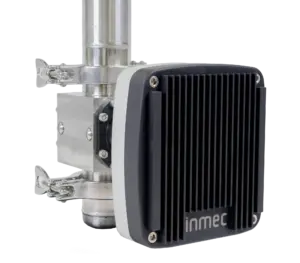 Model P-TC →
Multi-Effect Evaporation
Effect-by-Effect Concentration ControlContinuous Brix and total solids measurement through multi-effect and falling film evaporators shows how concentration builds in each effect, for juice concentrate as well as whey protein concentrate (WPC), permeate and lactose.
Typical applications
- Multi-effect evaporator monitoring
- Falling film evaporator control
- Brix between effects
- WPC, permeate and lactose evaporators
Measurement challenges
- Wide range across effects
- Pulp and protein fouling during runs
- Temperature changes between effects
- Long production runs between CIP cycles
Inmec solution
The measurement volume extends into the product, so pulp deposits and protein fouling on the sensor surface do not cause drift. The Model P-TC installs on the pumped transfer line between effects and measures continuously during production, with automatic temperature compensation and CIP compatibility.
Model P-TC →Evaporator Discharge
Hitting the Target ConcentrationThe discharge is where final concentration is controlled. Over-concentration wastes steam and can degrade the product; under-concentration gives off-spec concentrate and extra water to store and transport. A continuous signal lets the control system hold the target precisely.
Typical applications
- Final concentrate control (60–75 °Brix juice)
- Concentrated whey and permeate (40–60 % TS)
- Closed-loop evaporator control
- Energy and steam optimization
Measurement challenges
- High solids and viscosity
- Heavy coating at high concentration
- Mineral content in concentrated whey and permeate
- Need for a continuous control signal
Inmec solution
The Model P-TC gives a continuous 4–20 mA Brix or total solids value to the PLC or DCS for closed-loop control, reducing over-concentration, steam use and off-spec product compared with lab sampling.
Microwave measurement is suited to products up to 13 mS/cm, so concentrated whey and permeate should be checked against the actual product before selection.
Model P-TC →Concentrate Blending and Standardization
Verified Concentrate QualityMeasuring in agitated blending, standardization and batch tanks confirms the concentrate meets specification before it is stored or sent to further production.
Typical applications
- Blending and standardization tanks
- Batch correction and dilution
- Agitated concentrate buffer tanks
- Agitated permeate concentrate tanks
Measurement challenges
- Concentration changes during blending and dilution
- Viscous, high-solids product
- Representative reading needs good mixing
- Hygienic tank connections required
Inmec solution
The Model IL-G mounts flush in the tank wall with a GEA Varivent connection and a sanitary EPDM gasket. It is CIP compatible, measures 0–95 % Brix / total solids and gives a continuous signal for automatic dosing, dilution and batch correction.
For unmixed storage tanks, measure in the transfer line with the Model P-TC instead.
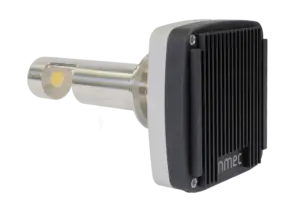 Model IL-G →
3-A Certified Hygienic Design
Models available with 3-A sanitary certification and tri-clamp connections—meeting food industry requirements for hygienic processing equipment.

Measures Through Pulp and Protein
Total solids measurement captures both dissolved and suspended components—fruit pulp in juice, protein and fat in dairy.

CIP Compatible
Withstands aggressive cleaning chemicals and frequent CIP cycles without performance degradation, holding calibration from one production run to the next.
Get in Touch About Your Food or Beverage Process
Share your process details and our measurement experts will be in touch within one business day.
Frequently asked questions
Can’t find what you’re looking for? Share your process details in the form above and our engineers will recommend the right sensor.
Which inline Brix sensor suits continuous juice concentration monitoring?
The Inmec Model P-TC measures Brix and total solids continuously in juice evaporator lines, from fresh juice at 8–15 °Brix to concentrate at 60–75 °Brix. It installs in 1.5″, 2″ or 3″ sanitary lines with a Tri-Clamp connection, is CIP compatible and is available in a 3-A certified version. For concentrate tanks, the Model IL-G measures in the tank with a flush GEA Varivent connection.
What should dairy manufacturers compare when choosing an inline total solids sensor?
The key points are hygienic certification (3-A for dairy lines), CIP resistance, stability through protein fouling, whether the sensor measures total solids including protein and fat, product conductivity, and integration with the control system. The Model P-TC covers dairy pipelines with a 3-A certified version, and the Model IL-G covers sanitary tanks.
Can Inmec sensors measure through fruit pulp and dairy protein?
Yes. Inmec’s digital microwave measurement responds to both dissolved and suspended components, so fruit pulp, fibres, protein and fat are included in the total solids reading. Coating on the sensor surface does not affect the measurement because the measurement volume extends into the product.
Are Inmec juice and dairy sensors 3-A certified and CIP-compatible?
Both the Model P-TC and the Model IL-G are CIP compatible with AISI 316L sensor bodies. The Model P-TC is available in a 3-A certified version in every size (1.5″, 2″ and 3″). Specify the 3-A version when requesting a quote.
Where should Brix be measured in a juice or whey evaporator?
Typical measurement points are the evaporator feed, between effects and at the discharge, where the final concentration is controlled. A P-TC in the discharge line gives the control system a continuous value to hold the target concentration. Concentrate storage and batch tanks are measured with the Model IL-G.
Are there conductivity limits for dairy applications?
Yes. Microwave measurement is suited to products up to 13 mS/cm conductivity. Concentrated whey, whey permeate and other high-mineral dairy streams can approach this limit depending on mineral content and solids level, so the actual product should be checked before selection.
How does continuous Brix measurement improve evaporator efficiency?
A continuous value at the evaporator outlet lets operators and control systems hold the target concentration precisely. This reduces over-concentration and the steam it wastes, avoids under-concentrated product and yield loss, and removes the delay of periodic lab sampling.
How do microwave sensors compare with inline refractometers for juice and dairy?
Inline refractometers measure dissolved solids optically at a prism surface and work well in clear liquids. Inmec microwave sensors measure total solids, both dissolved and suspended, across the product volume. This suits pulpy juices and protein-rich dairy streams, where an optical surface can foul or where suspended solids are part of the specification.