Continuous Measurement for Mixing & Blending Operations
Real-time concentration control from batch preparation to continuous inline blending
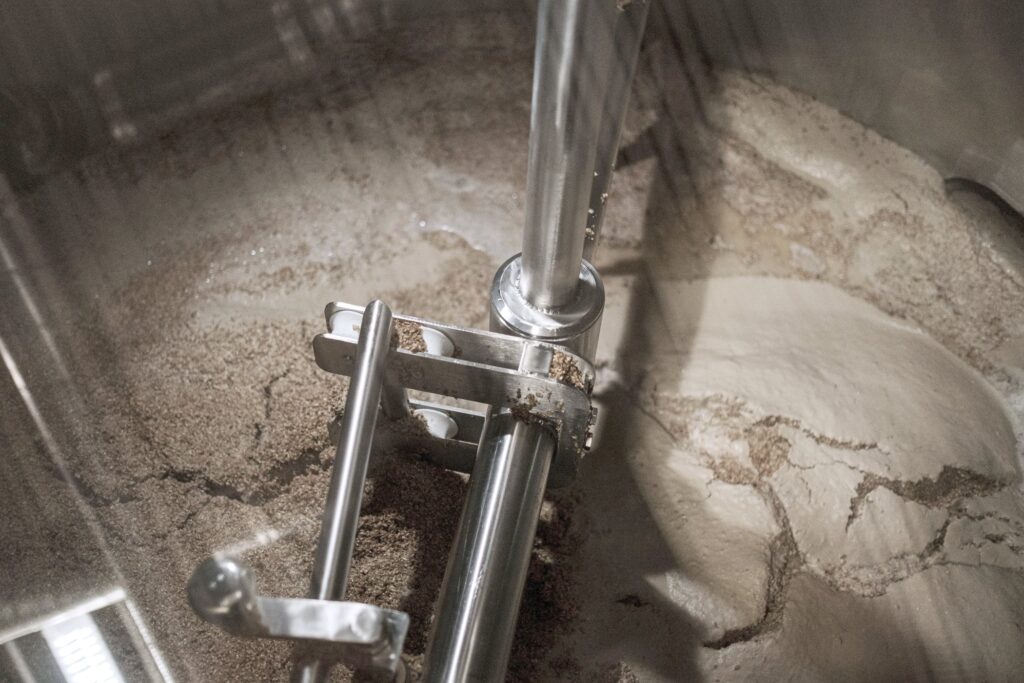
Precision Blending Starts with Accurate Measurement
Mixing and blending operations demand continuous, reliable concentration measurement to ensure product consistency, recipe accuracy, and quality control. Whether preparing batches in mixing tanks or running continuous inline blending systems, accurate total solids data is essential for process control and product standardization.
Conventional measurement approaches struggle with the realities of industrial mixing—manual sampling introduces delays that prevent real-time adjustment, optical sensors drift from coating during extended runs, and batch-to-batch variations go undetected until final quality checks reveal problems too late to correct.
Inmec’s digital microwave sensors deliver stable concentration measurement throughout mixing and blending operations—from batch preparation in mixing vessels through continuous inline blending and final product verification—providing the real-time data required for consistent product quality and efficient process control.
The Challenge: Why Mixing & Blending Require Reliable Measurement
Industrial mixing and blending present unique measurement challenges across batch and continuous operations:
Real-Time Process Control
Effective mixing control requires immediate feedback as ingredients are added or blend ratios change. Sampling delays prevent timely adjustments and result in off-spec batches.
Batch Endpoint Detection
Knowing exactly when target concentration is reached eliminates over-mixing (wasted energy) and under-mixing (product quality issues). Visual inspection and time-based control are insufficient for consistent results.
Recipe Consistency
Batch-to-batch variations in raw materials, temperature, or mixing conditions require measurement-based control to maintain consistent final product specifications.
Agitation and Turbulence
Vigorous mixing, high flow velocities, and turbulent conditions create challenging measurement environments. Sensors must deliver stable readings despite process dynamics.
Product Standardization
Final products must meet precise concentration specifications before packaging or transfer. Verification during the mixing process—not after—prevents costly rework.
Process Optimization
Without continuous data, opportunities to reduce mixing time, minimize ingredient waste, or improve energy efficiency remain invisible.
How Inmec Sensors Perform in Mixing & Blending
| Process Condition | Typical Mixing Environment | Inmec Sensor Performance |
|---|---|---|
| Concentration range | Variable (dilute to concentrated) | Stable across full range |
| Agitation/turbulence | Vigorous mixing, high flow rates | Unaffected by mixing intensity |
| Batch cycle time | Minutes to hours | Real-time feedback throughout |
| Product variations | Suspended solids, pulp, particles | Measures dissolved + suspended components |
| Temperature changes | Mixing-induced temperature shifts | Automatic temperature compensation |
| Coating/fouling | Product deposits during operation | Measurement unaffected by surface coating |
Mixing & Blending Applications
Inmec sensors support concentration measurement in both batch and continuous mixing operations across food & beverage, chemical, and industrial applications.
Batch Mixing in Tanks and Vessels
Real-Time Batch Control
In-tank measurement provides immediate visibility into mixing progress, enabling precise endpoint detection and automated control of batch preparation processes.
How it works:
The Model IL tank sensor is installed directly in the mixing vessel through a side or top nozzle. As ingredients are added and mixing proceeds, the sensor monitors concentration changes in real-time—showing exactly when the target specification is reached.
Typical applications:
- Sugar dissolution and syrup preparation
- Beverage concentrate blending
- Product dilution and standardization
- Recipe formulation and testing
- Batch correction and adjustment
- Chemical dosing verification
Key benefits:
- No sampling delays – immediate feedback during mixing
- Complete batch visibility – monitor entire concentration curve
- Unaffected by agitation – stable reading despite vigorous mixing
- Batch documentation – continuous data for quality records
Measurement challenges addressed:
- Agitation creates turbulent, non-uniform conditions
- Sampling is time-consuming and may not be representative
- Visual inspection cannot determine concentration accurately
- Time-based control doesn’t account for ingredient or temperature variations
Inmec solution: Direct in-tank measurement delivers stable concentration data throughout the batch cycle. Real-time feedback enables precise endpoint control, reduces over-mixing, and ensures consistent product quality batch after batch.
Continuous Inline Blending
Real-Time Blend Ratio Control
In-line measurement in blending systems provides the continuous feedback required for automated blend ratio control and quality verification during continuous production.
How it works:
Pipeline sensors (P2-P10) are installed directly in the blend line downstream of mixing points or static mixers. As blended product flows through, the sensor measures concentration continuously—supporting closed-loop control of blend ratios and immediate detection of variations.
Typical applications:
- Continuous inline blending (syrup + water)
- Juice reconstitution (concentrate + diluent)
- Beverage production lines (syrup blending)
- Product dilution control
Key benefits:
- Continuous quality verification – every liter monitored, not just samples
- Real-time blend control – immediate feedback for automation
- No bypass loops – direct in-line measurement
- Stable despite flow – unaffected by turbulence or velocity changes
Measurement challenges addressed:
- Blend ratios vary due to flow rate changes or equipment drift
- Mixing efficiency varies with flow conditions
- Quality issues aren’t detected until product reaches storage or packaging
- Manual sampling of continuous processes provides limited data
Inmec solution: In-line measurement provides continuous concentration data for closed-loop blend ratio control. Immediate detection of variations enables automated correction before off-spec product is produced.
Product Standardization and Quality Control
Verification Before Release
Concentration measurement during final product preparation ensures specifications are met before packaging, storage, or transfer to downstream processes.
Typical applications:
- Final product blending and adjustment
- Concentration verification before packaging
- Transfer line quality monitoring
- Batch approval and release
- Continuous product quality assurance
Inmec solution: Tank or pipeline sensors verify product concentration during final preparation—enabling adjustments before batch release and ensuring consistent product quality.
Tank or Pipeline: Choosing the Right Measurement Point
| Application Type | Best Sensor Location | What You Measure | Primary Benefit |
|---|---|---|---|
| Batch mixing | In-tank (Model IL) | Concentration change over time in vessel | Real-time batch control and endpoint detection |
| Continuous blending | In-line (P2-P10) | Concentration in flowing product | Continuous blend ratio verification |
| Post-mix verification | In-line (discharge line) | Final concentration before storage | Quality verification before release |
| Recipe development | In-tank | Batch mixing progression | Process optimization and recipe refinement |
| Dilution control | In-tank or in-line | Concentration during adjustment | Automated dilution endpoint |
Our product changeover waste in beverage production has been reduced by several hundred litres per changeover period. When the process is controlled by accurate Brix measurement, we also get a higher yield with optimized recipe management
— Production Manager, Nokian Panimo Brewery (Finland)
Let’s Improve Your Mixing and Blending Application
Give us a brief description of your measurement process and our experts will get in touch.
Why Digital Microwave Measurement Works Better for Mixing & Blending
Optical sensors struggle with mixing conditions
Surface fouling from product coating affects accuracy. Agitation creates measurement noise. Suspended particles block optical paths. Temperature changes require manual compensation.
Inmec sensors measure bulk product properties
Microwave measurement extends into the product volume—unaffected by surface coating, agitation, or flow turbulence. Measures both dissolved and suspended solids as total concentration. Automatic temperature compensation maintains accuracy.
The practical difference:
Optical sensors often require frequent cleaning and deliver unstable readings during mixing. Inmec sensors provide stable, continuous data throughout batch and continuous operations—enabling confident process control.